

Goddess Codes
reimagining the feminine

Astrology has been called the play of the gods. In fact, five out of these seven traditional planets were named after gods, revealing astrology’s innate towing of the patriarchal line from the beginning.
Only the Moon and Venus were named after goddesses.
The Moon represented the fertility cycle of women and the earth and was connected to the triple goddess (maiden, mother, crone). Venus represented the consort or wife (a role to which she is most defiantly NOT suited) with an emphasis on beauty & sexuality.
These archetypes were the extent of most women’s roles in early Greek and Roman society; they became the foundation of the feminine in astrology and have been with us for thousands of years.
A bit of astrological context might be useful at this point. All of the traditional planets are (and were) visible in the sky to the naked eye. They have been tracked by cultures around the world for thousands of years before what we know call Hellenistic Astrology (the foundation of modern astrology) was pieced together & practiced between roughly 300 BCE and 600 CE.
If you live in the western world, the myths and stories that created these planetary archetypes are rooted in the paternalistic Greco-Roman cultures. They are embedded within your psyche whether you are aware of them or not.
Fast forward to January 24th, 1801. A new planetary body was discovered between the orbits of Mars & Jupiter. This caused quite a stir - it was only the second “hidden” planet found via the telescope, Uranus having been discovered in 1781. This “eight planet” was named Ceres - after the Roman Goddess of the Grain.
Ceres became the third planet to be named after a goddess
Yet another fertility/ mother archetype to contend with! While women’s roles hadn’t changed that much, things were stirring in the 1800’s - the first wave of feminism found its footing by the mid-late century. Coincidence? Maybe, maybe not.
Between 1800 and 1807 three more planets (renamed asteroids in 1851) were discovered; they were also named after Greek and Roman Goddesses - Pallas Athena, Juno and Vesta.
Over the next 70 years, a hundred asteroids had been discovered and (mostly) named after Greek or Roman goddesses, nymphs and women, bringing more of the feminine into the astro-lexicon.
Though there are thousands of asteroids an astrologer can work with, I believe these four original Asteroid Goddesses - Ceres, Pallas Athena, Juno and Vesta - have an important place at the astro round table, holding court with the Sun, Moon, Mercury, Venus, Mars, Jupiter, Saturn, Uranus, Neptune, Pluto and Chiron.
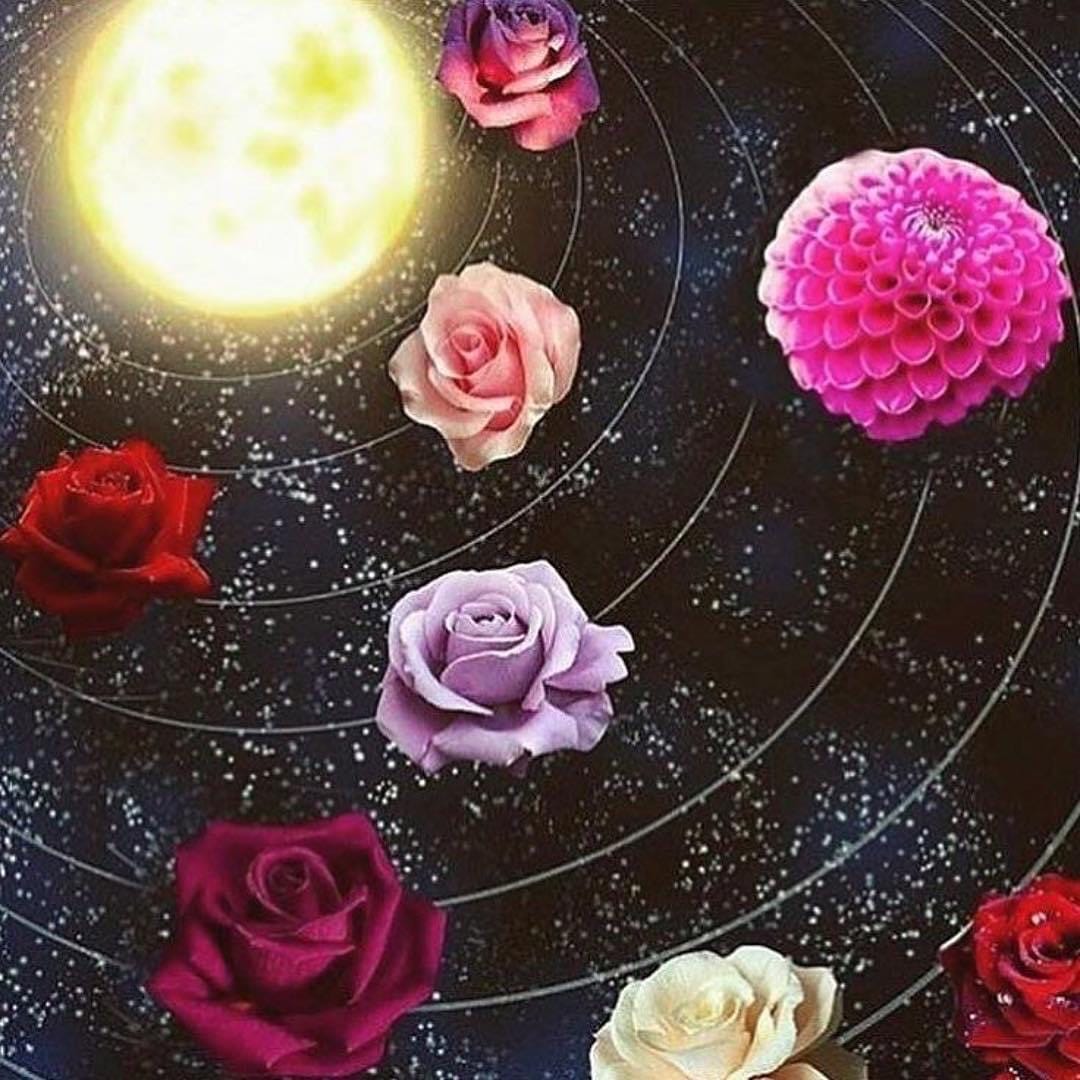
Ever since I met the Asteroid Goddesses in my natal chart, I’ve been obsessed with them.
Maybe because they spoke so fiercely & so passionately to me - I could not look away if I tried. But also because they spoke up loud and clear in my clients charts, too.
When I began to add them to my readings & forecasts, I felt as though a dimension of myself that I wasn’t aware of came to life, unfolding like a wingspan that was always with me.
While each Asteroid Goddess has a full life on her own, these planetary bodies travel within a group of thousands of other asteroids in the main asteroid belt, hundreds of them with names of goddesses, heroines and tragic figures.
I began to understand how each asteroid goddess could be seen to represent a different aspect or facet of the feminine psyche that has been fractured by thousands of years of patriarchal conditioning.
I started to “see” the patriarchal program coding for each of these goddess archetypes: Ceres, the mother/wound; Pallas Athena, the daughter of the patriarchy; Juno the bitter wife; and Vesta, the eternal virgin married to the sacred fire.
I got really curious about where these goddesses actually came from. What were their origin stories beneath all of the Greco-Roman programming?
And so I began to follow the red thread…
I was shown different time periods where these particular “goddess codes” were activated in my own life. I started sharing these ideas in a women’s circle I was working with at the time; many felt a resonance with what I was discovering.
Then I began to wonder how we could update these Goddess Codes within the individual and collective feminine psyche. Through learning the myths, studying ancient goddess cultures, sharing personal stories, engaging in honest self-inquiry, and embodiment practices.
I ran the first Goddess Codes Program for nine months beginning in September 2019; what a lifeline it turned out to be. Maybe it was an umbilical cord to the Great Mother, it was definitely nourishing for me and the women who joined me.
Working with the Asteroid Goddesses brought me back to Venus, and the truths about this feminine archetype that have been hidden but never forgotten…
This is the second in a Venus Day series of posts about the feminine, preparing the way for the upcoming round of Goddess Codes which begins July 22. You can read the first post here; To find out more about Goddess Codes sign up for the upcoming free class, Working with Venus & the Asteroid Goddesses. SIGN UP FOR VENUS & THE ASTEROID GODDESSES.